
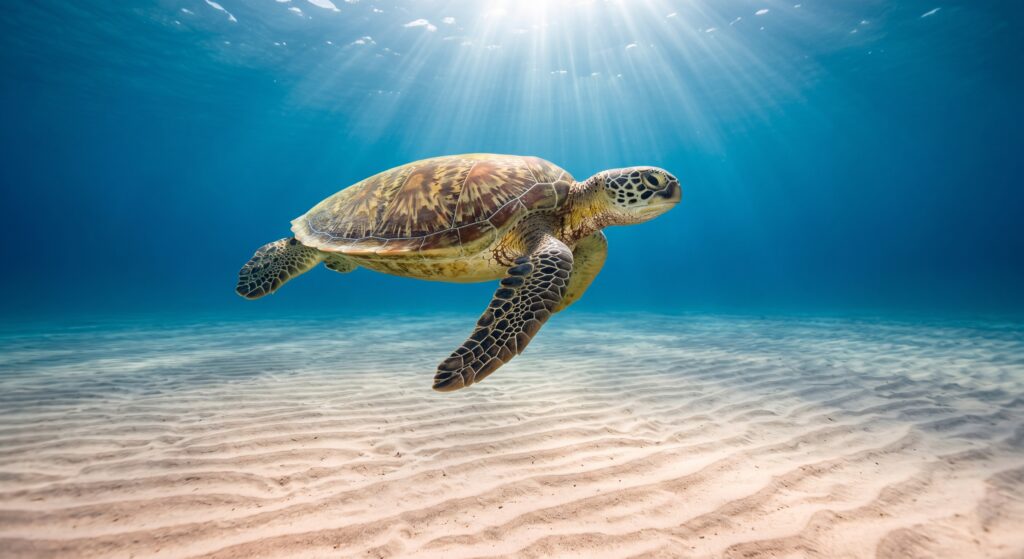
Turtle watching in Perhentian Island is an unforgettable experience, especially if you’ve dreamed of swimming alongside turtles in their natural habitat. The Perhentian Islands are among Malaysia’s key turtle habitats, with both Green Turtles and Hawksbill Turtles regularly seen gliding through the surrounding shallow reefs.
Better yet, you don’t need a diving certification or a special tour to encounter them. Many travelers spot turtles while snorkeling just a short distance from the beach, particularly around Perhentian Besar.
However, choosing the right time and place can greatly improve your chances. Certain months bring calmer seas and better underwater visibility, while turtle nesting season offers an entirely different experience, along with important guidelines visitors need to follow.
Here’s everything you need to know before setting out to see turtles in the Perhentian Islands.
When Is the Best Time for Turtle Watching in Perhentian Island?
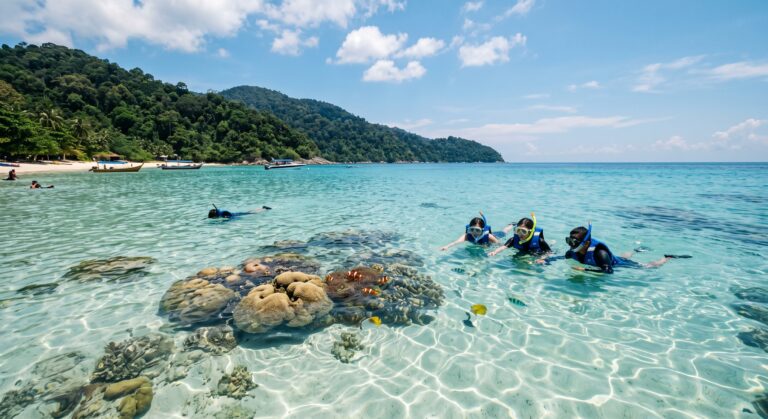
If turtle watching in Perhentian Island is high on your list, aim for the window between April and October. This period generally brings calmer seas and clearer water, with visibility ranging from 10 to 20 metres on a good day, giving you a much better chance of spotting a turtle feeding near the reef.
Nesting Season: May to September
The main turtle nesting season on Perhentian runs from May to September. This is when female Green and Hawksbill Turtles are most likely to come ashore at night to lay their eggs. Nesting visits are only possible through guided, conservation-approved programmes, so this isn’t something you can plan alone, but it’s worth asking your resort or a local dive center what’s available during your stay.
Best Snorkeling Months: April to October
For underwater turtle sightings, April through October is generally considered the sweet spot. Sea conditions are typically more settled than during the northeast monsoon months, which makes for easier, more enjoyable snorkeling and a better shot at seeing turtles going about their day near the reef.
Traveller’s Tip: Sea conditions can still change day to day, so always check with your resort or activity operator before heading out, even during the recommended months.
Understanding the Turtle Nesting Cycle
Sea turtles have one of the most remarkable life cycles in the ocean. Females travel vast distances between their feeding grounds and the very region where they hatched, returning there years later to lay their own eggs.
After coming ashore at night, a female turtle digs a nest in the sand, lays dozens of eggs, then carefully covers them before heading back to sea. The eggs incubate beneath the sand for roughly 45 to 70 days, depending on the weather and beach conditions.
When the hatchlings finally emerge, they instinctively head toward the brightest horizon, usually moonlight reflecting off the ocean. This is exactly why light pollution near nesting beaches is such a concern: bright lights from resorts, boats, or camera flashes can disorient hatchlings and pull them away from the sea instead of toward it.
Meet Perhentian’s Sea Turtles: Green & Hawksbill
Two species call the Perhentian Islands home, and each has its own personality underwater.
Green Turtles are the larger of the two, often seen grazing on seagrass beds in shallow coastal waters. Adults can weigh over 150 kilograms and live for decades in the wild.
Hawksbill Turtles are smaller and easily recognised by their pointed, beak-like mouths, which they use to feed on sponges tucked into coral reefs. In doing so, they help keep reef ecosystems healthy by controlling sponge populations that would otherwise crowd out coral.
Both species are globally threatened, which is exactly why the Perhentian Islands matter so much as a sanctuary, and why every visitor’s actions in the water genuinely count.
Where to See Turtles in Perhentian Besar (Top Spots)
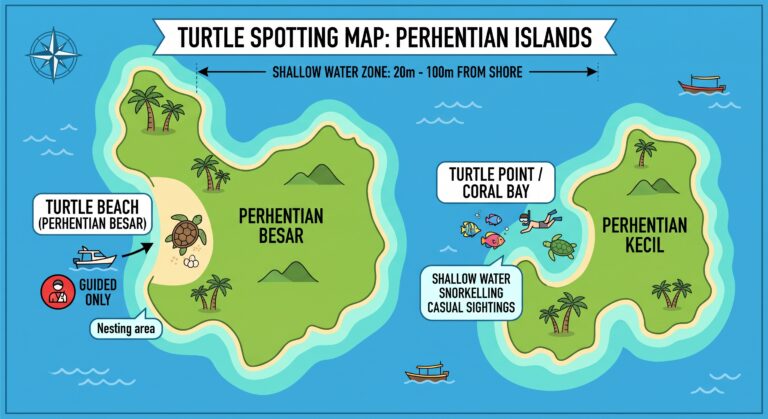
Many of the best turtle-spotting sites are just 20 to 100 metres from shore, making turtle watching in Perhentian Island accessible even if you’re not a strong swimmer or an experienced diver.
Turtle Beach (Perhentian Besar): A well-known nesting area right on Perhentian Besar. Access is by boat and guided visits only, so this isn’t a spot to explore on your own.
Turtle Point / Coral Bay: A favourite for snorkeling, with shallow water and a good chance of casual turtle sightings alongside colourful reef fish.
Note: Access and conservation rules can change, so always check with local guides or dive centres before planning your visit to any of these spots.
How to Snorkel with Turtles Responsibly
Spotting a turtle gliding through clear water is often the highlight of a Perhentian trip, but it’s worth remembering these are wild animals, not photo props.
If a turtle appears nearby, stay calm and let it continue on its way. Avoid swimming directly above it or blocking its path to the surface, since turtles need to come up for air regularly. Chasing a turtle for a closer photo can stress the animal and force it to burn energy it needs to survive.
Experienced local guides usually know where turtles are most likely to be while keeping a respectful distance, which is one good reason to join an eco-conscious snorkeling trip rather than going it alone.
Responsible Turtle-Watching Rules to Follow
Protect the turtles, and your own experience, by keeping these simple rules in mind:
- Keep your distance: Stay at least 3 to 5 metres away or follow your guide’s recommendation.
- Never touch, chase, or feed turtles: This stresses them and disrupts their natural behaviour.
- No flash photography at night: Bright lights disorient nesting females and hatchlings.
- Stay off marked nesting areas: Do not walk on or disturb sections of beach marked for nesting.
- Use reef-safe sunscreen: Avoid lotions that can harm coral and marine life.
- Follow your guide’s instructions at all times: They know the local regulations and how to keep both you and the turtles safe.
Why Turtle Conservation Matters
Even though the Perhentian Islands provide valuable habitats for sea turtles, these animals still face significant threats. For visitors interested in turtle watching in Perhentian Island, understanding these challenges can help encourage more responsible interactions with the marine environment. Plastic pollution is one of the biggest concerns, as turtles can mistake floating plastic bags for jellyfish. Climate change is another factor, with rising sea levels eroding nesting beaches and warmer sand potentially affecting the balance of male and female hatchlings. Coral reef degradation, often caused by pollution or careless anchoring, also reduces the feeding and shelter grounds that turtles depend on.
The encouraging part is that conservation groups across Malaysia continue working on this through research, habitat monitoring, community education, and responsible tourism practices, all of which visitors can support simply by being mindful during their stay.
How to Join a Turtle-Watching Tour
If you’d like to go beyond a casual snorkel and see turtle nesting activity or a guided release, here’s what to look for:
- Book with reputable operators who prioritize conservation and responsible viewing conduct.
- Choose small-group or community-led tours to keep disturbance to a minimum.
- Ask about permits and guidelines — legitimate nesting-season trips will follow local regulations and often work alongside conservationists.
Swim with Turtles While Staying at Tuna Bay Island Resort
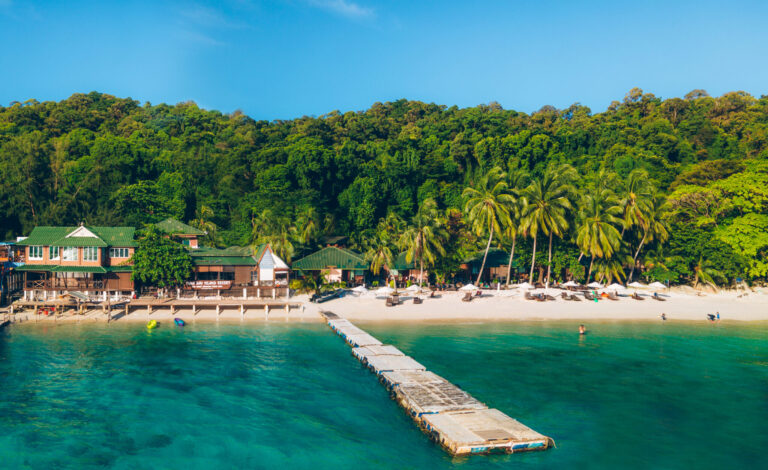
Staying on Perhentian Besar puts you within easy reach of some of the island’s best turtle-watching spots, including Turtle Beach itself. At Tuna Bay Island Resort, you can:
- Join a snorkeling trip: Head out to nearby reefs with a good chance of encountering turtles feeding or gliding along the coral.
- Explore the house reef: When sea conditions allow, turtles and other marine life can sometimes be spotted right off the resort’s own stretch of coast.
- Go diving: Try a fun dive or sign up for a PADI course if you’d like to get closer to the underwater world.
- Ask our team about turtle season: If you’re visiting between May and September, our staff can point you toward guided, conservation-approved options.
- Unwind at Tuna Spa: After a morning in the water, treat yourself to a relaxing massage before heading back out for an afternoon swim.
Conclusion: Make the Most of Your Turtle Encounter
Swimming with turtles in Perhentian is one of those experiences that stays with you long after your holiday ends, and it’s easier to make happen than most people expect. Visit between April and October for the best snorkeling conditions, keep an eye out for nesting season between May and September, and always follow responsible viewing practices so these gentle creatures keep coming back for generations of travellers to come.
Wherever you end up snorkeling, remember that a respectful distance is what makes the encounter special, for you and for the turtle.
Visit Tuna Bay Island Resort at Perhentian Besar Island!
Planning a trip to swim with turtles in Perhentian? Stay at Tuna Bay Island Resort on Perhentian Besar, just a short boat ride from Turtle Beach and some of the island’s best snorkeling spots.
Let us help you make the most out of your holiday, check out Tuna Bay Island Resort 2026 Promo & Rates where you can pick a package that suits your interest!
FAQs
- What is the best time to swim with turtles in Perhentian?
The best window for spotting turtles while snorkeling is generally April to October, when the sea is calmer and visibility is clearer. Turtle nesting season runs from May to September.
- Can I see turtles without diving?
Yes. Many turtle sightings happen while snorkeling in shallow water, often just 20 to 100 metres from shore, so you don’t need to be a certified diver to see one.
- Where is the best place to see turtles on Perhentian Besar?
Turtle Beach, Turtle Point / Coral Bay, and the quieter D’Lagoon and Rompin Reef areas are among the top spots. Turtle Beach itself is a nesting site accessible only through guided visits.
- Is it safe to touch or get close to a turtle while snorkeling?
No. Turtles should never be touched, chased, or fed. Keep a distance of at least 3 to 5 metres, let the turtle continue its natural behaviour, and always follow your guide’s instructions.
- Can I watch turtles nesting at night?
Night visits during nesting season are sometimes possible through guided, conservation-approved programmes. Never attempt to approach a nesting turtle on your own and avoid using flash photography or bright lights.
- Does Tuna Bay Island Resort offer turtle-watching activities?
Tuna Bay Island Resort is located on Perhentian Besar, close to Turtle Beach and other turtle-spotting sites. Guests can join snorkeling trips, explore the house reef, and ask our team about guided turtle-season options during their stay.