
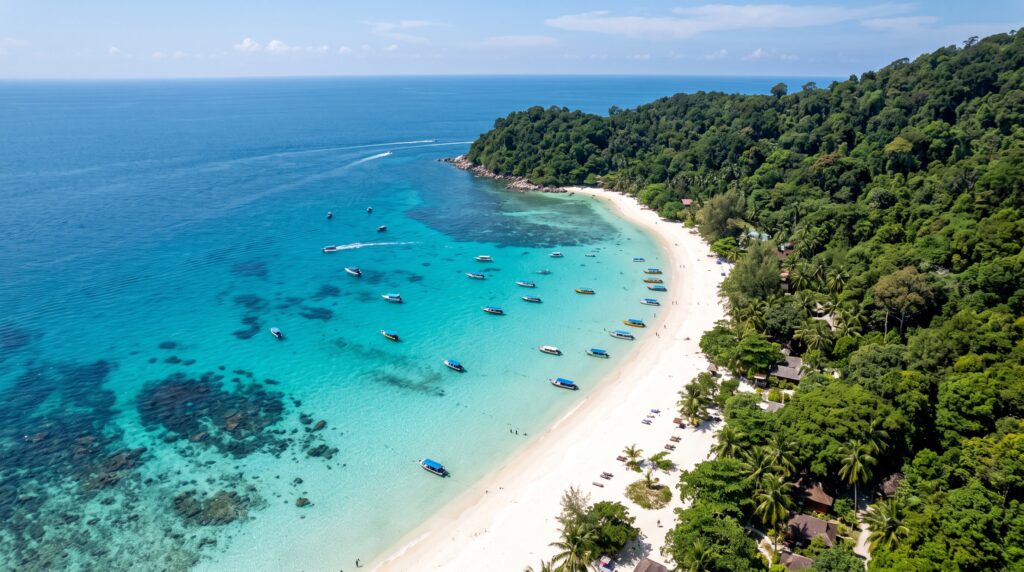
Perhentian Islands weather follows a simple pattern: a long, mostly sunny season from around March to October, and a rainy northeast monsoon from roughly November to February, when most resorts and boat services close. Daytime temperatures stay warm all year, typically around 30 to 32°C, so the real difference between months is rain, wind and sea conditions.
That matters more than you might expect on a small island. Calm seas mean smooth boat transfers from Kuala Besut, clearer water for snorkeling and diving, and more relaxed beach days. Rough seas can mean cancelled ferries and cloudy water, even when the sun is out.
Here’s a month-by-month look at Perhentian Islands weather, plus the best time to visit for snorkeling, diving, turtle watching, and quieter beaches.
When Is the Best Time to Visit Perhentian Islands?
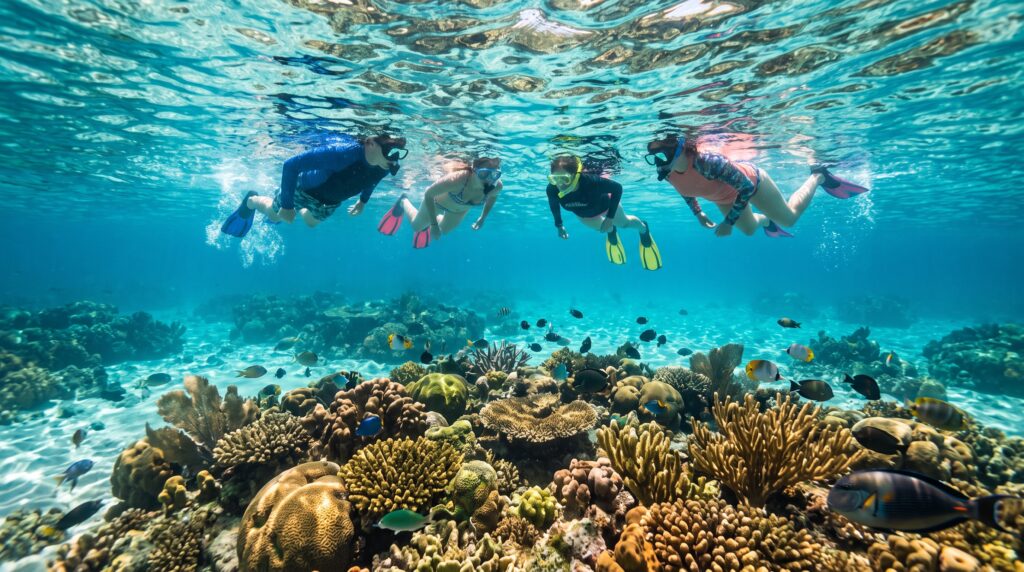
The best time to visit the Perhentian Islands is generally April to September. This window usually brings the calmest seas, the most sunshine, and the clearest water, with visibility often reaching 10 to 20 meters on a good day.
Peak Season: June to August
June to August tends to offer the most settled conditions of the year. It also lines up with school holidays and the main European travel season, so beaches, boats and accommodation fill up faster. If you plan to visit during these months, book early.
Shoulder Months: March, September & October
March marks the islands’ reopening after the monsoon, and the seas may be settling in the first few weeks. September and October bring fewer crowds and are still great for most travelers, though short afternoon showers become more common toward late October. For a closer look, read our guide to Perhentian Island in September & October.
Traveler’s Tip: Even in the best months, conditions can change from day to day. Always check with your resort or boat operator the day before a crossing or a snorkeling trip.
Perhentian Islands Weather by Month
The table below shows typical Perhentian Islands weather for each month. Weather patterns shift a little from year to year, so treat it as a planning guide rather than a forecast.
Month | Weather | Sea conditions | Islands open? | Verdict |
January | Heavy rain, strong winds | Rough, boats often suspended | Mostly closed | Avoid |
February | Rain easing, still windy | Choppy | Mostly closed | Avoid |
March | Drier, more sunshine | Settling, some swell early on | Reopening | Good, quieter |
April | Hot and mostly dry | Calm, clearing water | Open | Very good |
May | Hot, sunny, occasional showers | Calm, good visibility | Open | Excellent |
June | Sunny, short afternoon storms possible | Calm, very good visibility | Open | Excellent, busier |
July | Sunny, short afternoon storms possible | Calm, very good visibility | Open | Excellent, peak crowds |
August | Sunny, short afternoon storms possible | Calm, good visibility | Open | Excellent, busy |
September | Mostly sunny, more showers | Mostly calm | Open | Very good |
October | Showers increase late in the month | Calm to moderate | Open | Good, fewer crowds |
November | Monsoon begins, heavy rain | Rough | Closing | Avoid |
December | Peak monsoon rain | Rough, boats often suspended | Mostly closed | Avoid |
Perhentian Islands weather stays warm all year, with temperatures typically around 30 to 32°C by day and 23 to 25°C at night. Sea temperatures are warm year-round, so a rash guard is enough for most snorkelers.
March to May: Reopening & Dry Season
The islands come back to life as the monsoon fades and Perhentian Islands weather turns hot and dry. Expect sunny days and increasingly calm water, with April and May often among the most pleasant months before the mid-year crowds arrive.
June to August: Calm Seas & Peak Crowds
This is when Perhentian Islands weather is at its most reliable, with smooth boat rides and clear water. Brief afternoon thunderstorms can roll in, but they usually pass quickly. Expect more people on popular beaches and snorkel spots.
September to October: Quieter Shoulder Season
Perhentian Islands weather is still generally good, with fewer visitors and a more relaxed feel. Rain becomes more frequent as October ends, and some businesses start winding down ahead of the monsoon.
November to February: Monsoon Season
During these months, Perhentian Islands weather is shaped by the northeast monsoon, which brings heavy rain, strong winds, and rough seas to Malaysia’s east coast. Most resorts, dive centers and ferry services close, and island travel is not recommended.
Perhentian Monsoon Season: When Do the Islands Close?
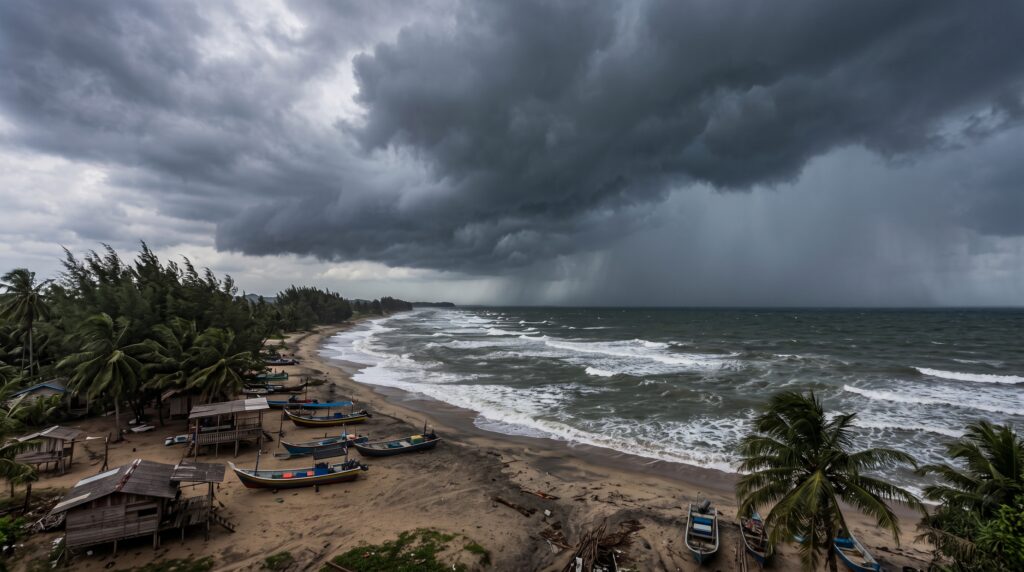
Most of the Perhentian Islands typically close from around early November to late February or early March. During this period, the northeast monsoon brings the heaviest rainfall of the year to Malaysia’s east coast, along with strong winds and high waves.
What this means for travelers:
- Ferries are limited or suspended. Boats from Kuala Besut may not run when the sea is rough, for safety reasons.
- Most resorts and dive centers shut. Only a handful of places, if any, stay open, with limited services.
- Snorkeling and diving are poor. Strong currents and stirred-up sediment reduce visibility.
Exact opening and closing dates vary by resort and by year, depending on how Perhentian Islands weather develops. If you’re planning a trip near the edges of the season, check directly with your accommodation before booking transport.
Note: Looking for a beach holiday during the monsoon? Malaysia’s west coast islands usually have better conditions at this time. See our guide to the 6 Best Malaysian Islands to Visit During Monsoon Season.
Best Time to Visit Perhentian by Activity
The best Perhentian Islands weather for your trip depends on what you want to do. Here’s how the season breaks down by activity.
| Activity | Best months | Why |
| Snorkeling | April to August | Calmest water and best visibility near the reef |
| Scuba diving | May to August | Clearest water at dive sites, smoother boat rides |
| Turtle watching | April to October | Calm seas for snorkeling; nesting season runs roughly May to September |
| Fewer crowds | March–April, September–October | Good weather without peak-season crowds |
| Families with kids | April to August | Calm, shallow water and steadier weather |
Snorkeling
Calm, clear water makes a big difference for snorkelers, especially beginners. From April to August, many shallow reefs are easy to reach from the beach or by a short boat ride.
Diving
Divers generally get the best visibility from May to August. If you’re new to diving, read our guide to Perhentian Island diving before you go.
Turtle Watching
Turtles can be spotted while snorkeling throughout the open season, and nesting activity mainly happens from around May to September. Learn more in our guide to turtle watching in Perhentian Island.
Quieter Beaches
If you’d rather avoid busy boats and beaches, aim for March to April or September to October. You’ll trade a slightly higher chance of rain for more space and a calmer island feel.
Perhentian Islands Weather Tips for Your Trip
A little preparation goes a long way, because Perhentian Islands weather can change quickly on a small island:
- Pack for heat and sun: Light, breathable clothing, a wide-brimmed hat and sunglasses. The sun is strong even on cloudy days.
- Use reef-safe sunscreen: It protects your skin without harming the coral you came to see.
- Bring a light rain jacket: Short tropical showers can appear even in the dry months.
- Keep a dry bag handy: Useful for boat transfers, when spray and sudden rain are common.
- Plan water activities for the morning: Seas are often calmest early in the day, before afternoon winds or storms build.
- Allow a buffer day: If your trip falls near the start or end of the season, leave a spare day before your flight home in case a boat is delayed.
- Stay hydrated: Heat and time in the water add up quickly, so drink more than you think you need.
For a full checklist, see our packing guide for Malaysia beaches.
Make the Most of the Season at Tuna Bay Island Resort
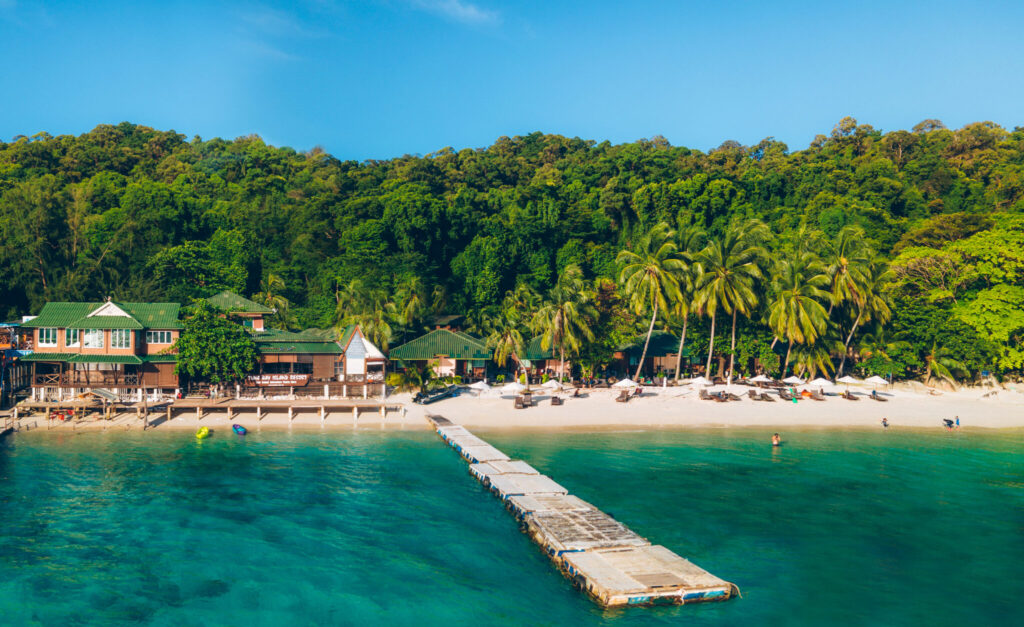
Staying on Perhentian Besar puts you close to calm, sheltered bays and some of the island’s best snorkeling spots. At Tuna Bay Island Resort, you can:
- Get daily weather and sea updates: Our team can advise on boat conditions and the best time of day for water activities.
- Join a snorkeling trip: Head out to nearby reefs when the sea is at its calmest.
- Go diving: Try a fun dive or sign up for a PADI course during the clearest months.
- Explore the house reef: When conditions allow, marine life can be spotted right off the resort stretch of coast.
- Unwind at Tuna Spa: A good way to spend a hot afternoon or wait out for a passing shower.
- Plan your transfer: See our Getting Here page for boat and travel details from Kuala Besut.
Conclusion: Plan Around the Season
Perhentian Islands weather rewards travelers who time their trip well. Visit between April and August for the calmest seas and clearest water; choose March, September, or October for quieter beaches, and avoid November to February, when the monsoon closes most of the islands.
Whenever you go, keep an eye on the daily forecast and sea conditions, and build a little flexibility into your plans. Perhentian Islands weather sets the rhythm of island life, and going with it is part of the experience.
Visit Tuna Bay Island Resort at Perhentian Besar Island!
Planning your trip around the best Perhentian Islands weather? Stay at Tuna Bay Island Resort on Perhentian Besar, close to calm bays, clear reefs and some of the island’s best snorkeling spots.
Let us help you make the most of your holiday. Check out Tuna Bay Island Resort Promo & Rates and pick a package that suits your travel dates!
FAQs
- What is the best month to visit the Perhentian Islands?
April to August generally offers the best weather, with calm seas, plenty of sunshine and clear water. June to August is the most settled period but also the busiest.
- When do the Perhentian Islands close?
Most resorts, dive centers and ferry services typically close from around early November to late February or early March, during the northeast monsoon. Exact dates vary by resort and year.
- What is Perhentian Islands weather like in December?
December is usually the peak of the monsoon, with heavy rain, strong winds and rough seas. Most of the islands are closed, and travel is not recommended.
- Does it rain a lot in the Perhentian Islands during the open season?
Not usually. Between March and October, Perhentian Islands weather is mostly sunny, with short showers or afternoon thunderstorms that tend to pass quickly. Rain becomes more frequent towards late October.
- What is the water temperature in Perhentian?
The sea is warm all year, typically around 28 to 30°C, so most snorkelers only need a rash guard for sun protection.
- Is Perhentian good to visit in September and October?
Yes. Both months usually have good weather and fewer crowds than mid-year, though showers become more common towards the end of October.
- Can I check the Perhentian weather forecast before my trip?
Yes. Check the Malaysian Meteorological Department (MetMalaysia) forecast for Besut or Terengganu a few days ahead and confirm sea conditions with your resort or boat operator the day before travelling.
- Can Tuna Bay Island Resort help me plan around the weather?
Yes. Tuna Bay Island Resort is located on Perhentian Besar, and our team can advise on sea conditions, boat transfers and the best time of day for snorkeling or diving during your stay.